

The Netherlands isn’t known for it’s cuisine. Yet, it lies in Europe and Amsterdam has a history going back over a thousand years and set’s a worldwide standard for multiculturalism. By the time you’ve experienced my Amsterdam By Mouth Food tour, your tastebuds will have been kicked by umami, crispy, salty, sweet, warm, cold and wet. Your ears have listened to so many great stories about Amazing Amsterdam you’ll be ready for much much more! In this post I will walk you through half -so five- of the Dutch delicacies I will let you try during my Amsterdam By Mouth food tour.
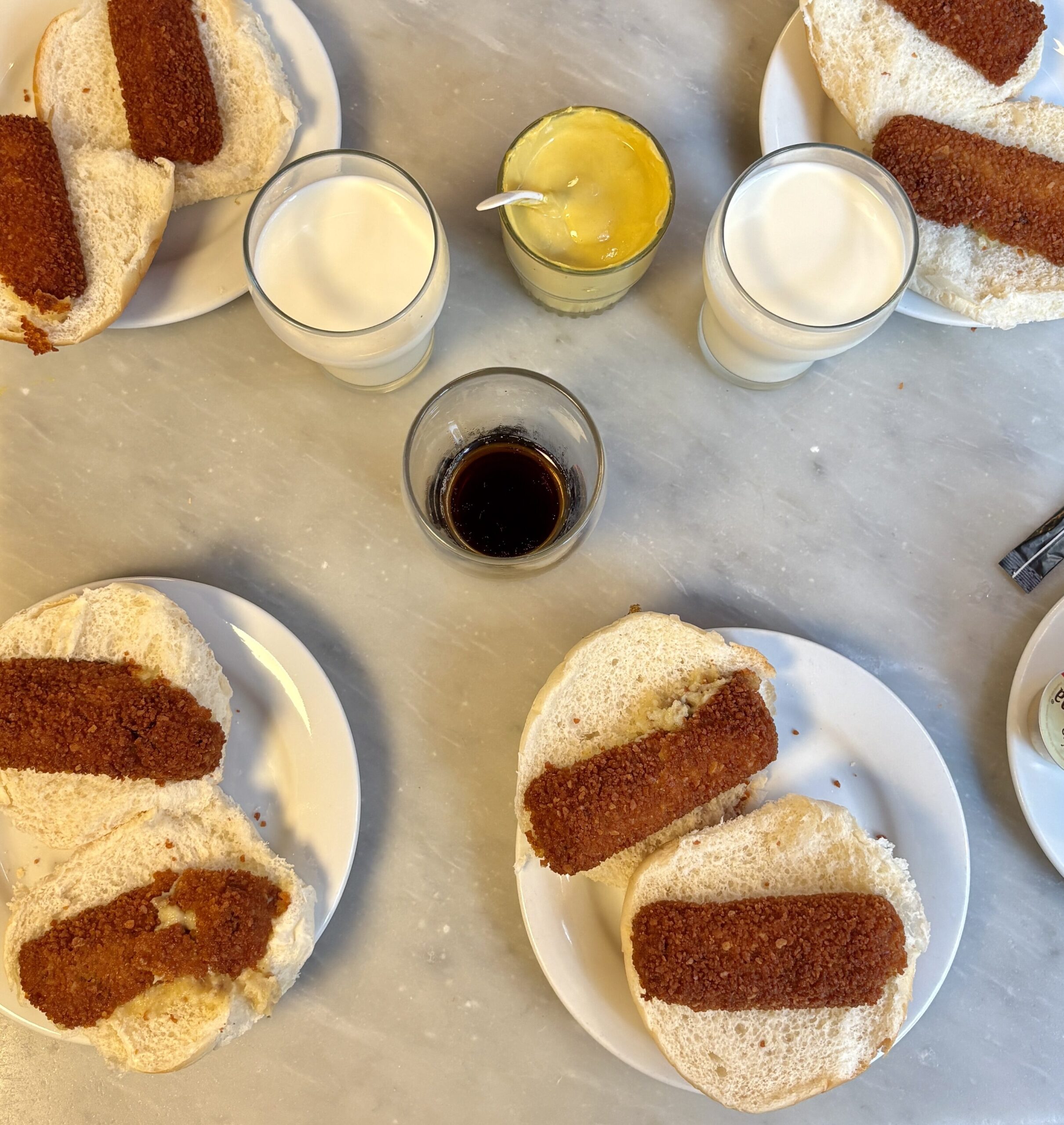
Broodje Kroket
I’ll start with my favorite, a broodje kroket. It’s that type of snack which for Dutch people brings back memories of family outings, of being together, of your oma, and symbolizes the untranslatable and unmistakable Dutch concept of Gezelligheid.
The thing is, a broodje kroket, is pretty much available everywhere. And everywhere it’s good, because let’s be honest:
Who doesn’t like a deepfried, hot, crispy dough with a steaming hot meaty mash of beef on the inside?
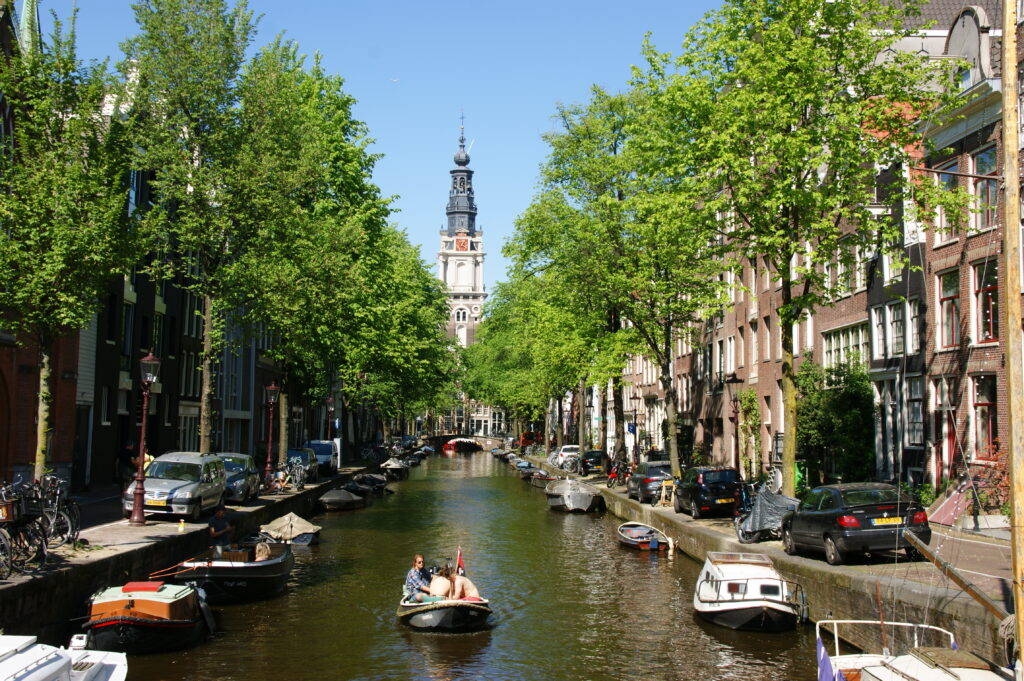
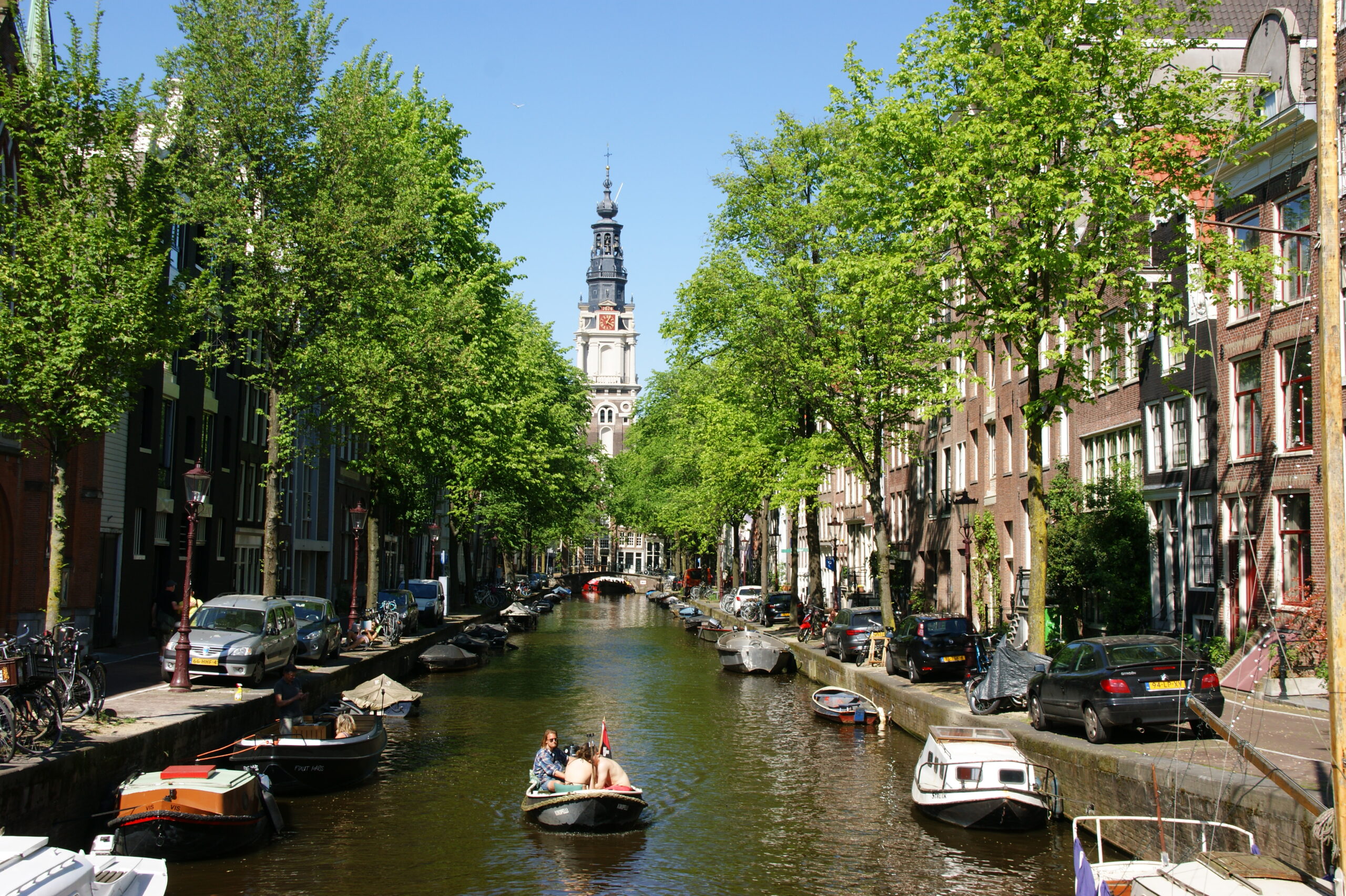
Amsterdam’s serene canals, the trees that line them – marking the first public tree planting initiative ever -, it’s vibrant culture, and rich art scene are all widely recognized. However, what about it’s culinary delights? Surely, a city of such renown has unique specialties worth sampling?
So a kroket is a beefstew with potatoes and herbs, rolled up in a jacket of breadcrumbs, which is fried and it turns out hot, brown and crispy. It’s so delicious you’ll forget your twelve hour travel journey in no time. Broodje means sandwich, and in this case is a soft white bun, a tat sweet and perfect to wrap the fried kroket in. The classic Dutch kroket is served with sharp thin mustard.
Even though the kroket, just like it’s twin brother Bitterballen, is served in many places. You want to have this in a place with a name, a reputation, an atmosphere and ambiance unbeatable, where Amsterdam’s heart beats like no place else and where the recipy of the kroket has been a family recipy for generations..
Stroopwafel
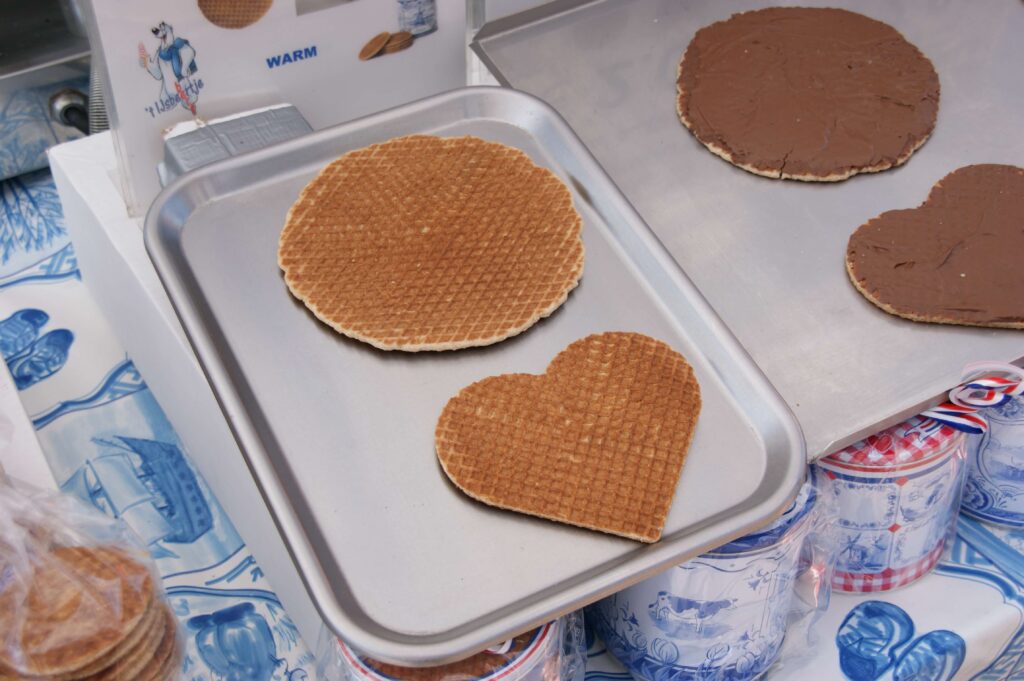
A true classic! I was taken aback to discover, more than twenty years ago, that not many people around the world were familiar with this incredible cookie, or waffle. I just wanted to mention cookies since it’s derived from the Dutch term koekje, while in Britain they refer to it as a biscuit, originating from the French word biscuit. But anyway, oh my, how the stroopwafel’s fame has risen to stardom!
As soon as the hot spiced dough emerges from the iron and is filled with the golden-brown caramel we Dutch call ‘stroop,’ that first crispy, warm gooey delight hitting your taste buds will transform you forever.
“Biting into my first stroopwafel felt like the heavens opened, the canals sang in harmony, and every Dutch grandmother in history whispered, “Welkom, kind”, as molten caramel bliss melted between two golden halos of perfection.”
Stroop isn’t exactly caramel. In the Netherlands, we do everything our own way. We are Dutch -and not Deutsch– for a reason. Stroop is caramel with a spicey kick. Grounded cinnamon is the key, but the occasional clover and ginger make their way into stroop aswell and those have proven key ingredients. The perfect balance of these three is precisely what makes for a great stroopwafel.
Did you know that the Dutch were the only power allowed in the world, to trade with the Japanse for over three hundred years? And did you also know that’s it’s right after the first contact with the Japanese, that the cooking instrument of using a hot iron to create things like waffles, arrived in the Low Countries? So the stroopwafel might be Dutch, it’s technique of cooking the dough originates from a far away place. You are what you eat.
Cheese – Heaven’s gold
My grandmother grew up on a dairy farm, on the outskirts of Leiden, the birthplace of Rembrandt and home to the oldest university of the Netherlands. Many of the dairy farms around Leiden are gone now, but the love for Kaas, Dutch for cheese, hasn’t disappeared in my family.
The Latin root caseus—from which nearly every Indo-European word for cheese ultimately descends—gave its name to this heavenly magic. In English, the hard ‘K’ sound, changed into the softer ‘ch’ sound. But now let’s get to the good stuff, just be prepared to actually say ‘Kaas‘ whenever a picture is taken with you on it while you are in the Netherlands or Belgium!
Breakdown
Kaas = like “car” but with an s at the end.
ka → like “kah”. as → like the s in “bus,” but the vowel is long: aa
Say ‘Kaaaas’, and click.
What’s better than exploring aalllll the differents kinds of Gouda’s and Edam’s with a local at a market stall, who is addicted to cheese just like you?
not much.
I can talk about how it’s made, of what, where, how the flavour changes due to aging, how factors influence the aging, like temperature, moist, light, and even where the cows have grazed and how this influences the flavor, and how Gouda is not a protected product in name. But that’d be a boring long read wouldn’t it? Better just come over and try cheeses like Leidse Komijnenkaas, jong, jong belegen, belegen, oud, & beemsterkaas to name a few.
And have you heard of a ‘Kaasschaaf?’, a typical tool, only found in the Netherlands. Come to the Netherlands, find you. It’s ‘Kaasie’, or, easy!
Brown Bar & a headbud
I’m cheating here, I’ll do two in one!
One absolute must for Amsterdam, is experiencing a brown bar. You know, one of these bars where the wooden floors squeek when you enter, where the smell of decades -if not centuries- of dried up beer and what not gently enters your nostrils, and where there’s no music since it’s already gezellig without adding the extra’s.
Amsterdam has a legendary list of brown bars, of which some are literally hundreds of years old. Some are tucked away in small alleys, some are widely visible on the main streets, but they all have something in common, their interior is brown due to the usage of wood, but more importantly, the color of the ceiling and walls changed due to decades of smoke being exhaled.
What defines a brown bar? I’d say in the first place, it’s level of gezelligheid, which in this context translates best to coziness. But any self respectable brown bar serves multiple kinds of Jenever, the O.G. gin. If you want to try real Dutch history, culture & tradition, then this is the drink to try.
I joke that Jenever fuels airplanes. That is to say, the young ones do, the aged ones are much softer. Jenever is made from the Juniper berry and some other ingredients, and was invented in the Low Countries. It was the British who took this drink and gave it’s current world dominated name gin – The word gin is derived from the word Juniper-. Gin is basically the English nickname for Dutch jenever.
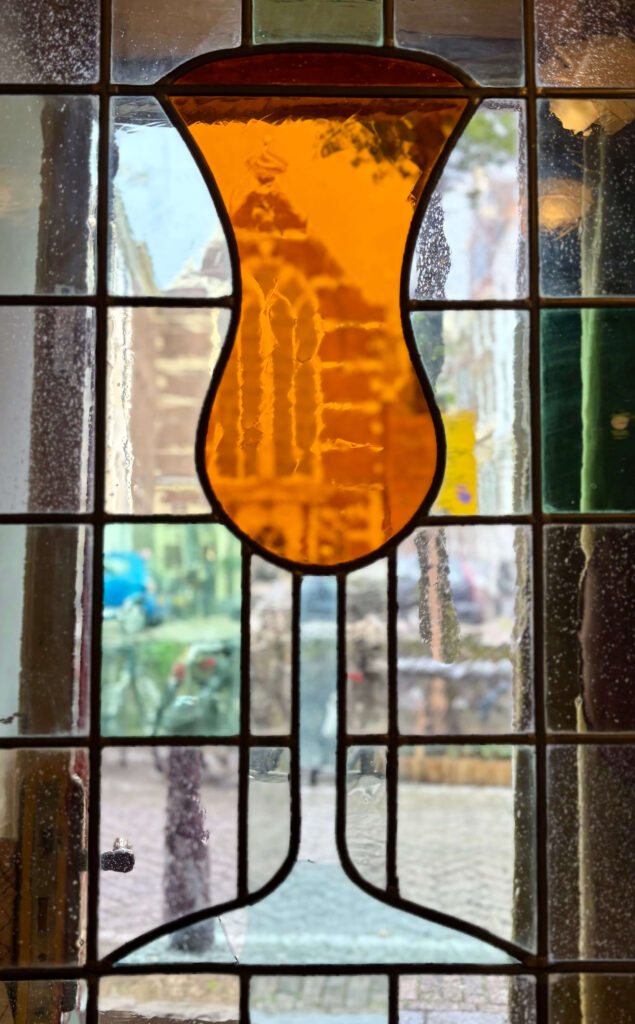
Besides the extreme variety in jenever, it’s the way we Dutch drink it which forms the fun -and culturally important- part. Since we are known to be stingy, mercantile oriented people, we want our glasses to be full. We want our money’s worth. Hence the specially designed jenever glass is filled to over the top, like full-full. Filled to over the edge. The Jenever will form a little bulb sticking out over the glass. The bartender will then tell you to put your hands behind your back, bend over, and slurp till there’s a decent amount sipped out of the little glass, so afterwards you can safely lift the glass, without spilling any and cheer with your neighbor. It’s the only socially tolerated moment you’re allowed to slurp!
Proost!
Ralph’s carefully selected shops and delicacies to try, when in Amsterdam – Amsterdam By Mouth: Discover Amsterdam through its flavors on a curated three-hour journey that blends local tastes, hidden stories, and the city’s rich culinary heritage into one unforgettable experience.
Have you enjoyed my story? Read all my stories on Amsterdam here.
Written by Ralph Deckers
Local Amsterdam Guide & Historian – Dutch Cultural Journeys