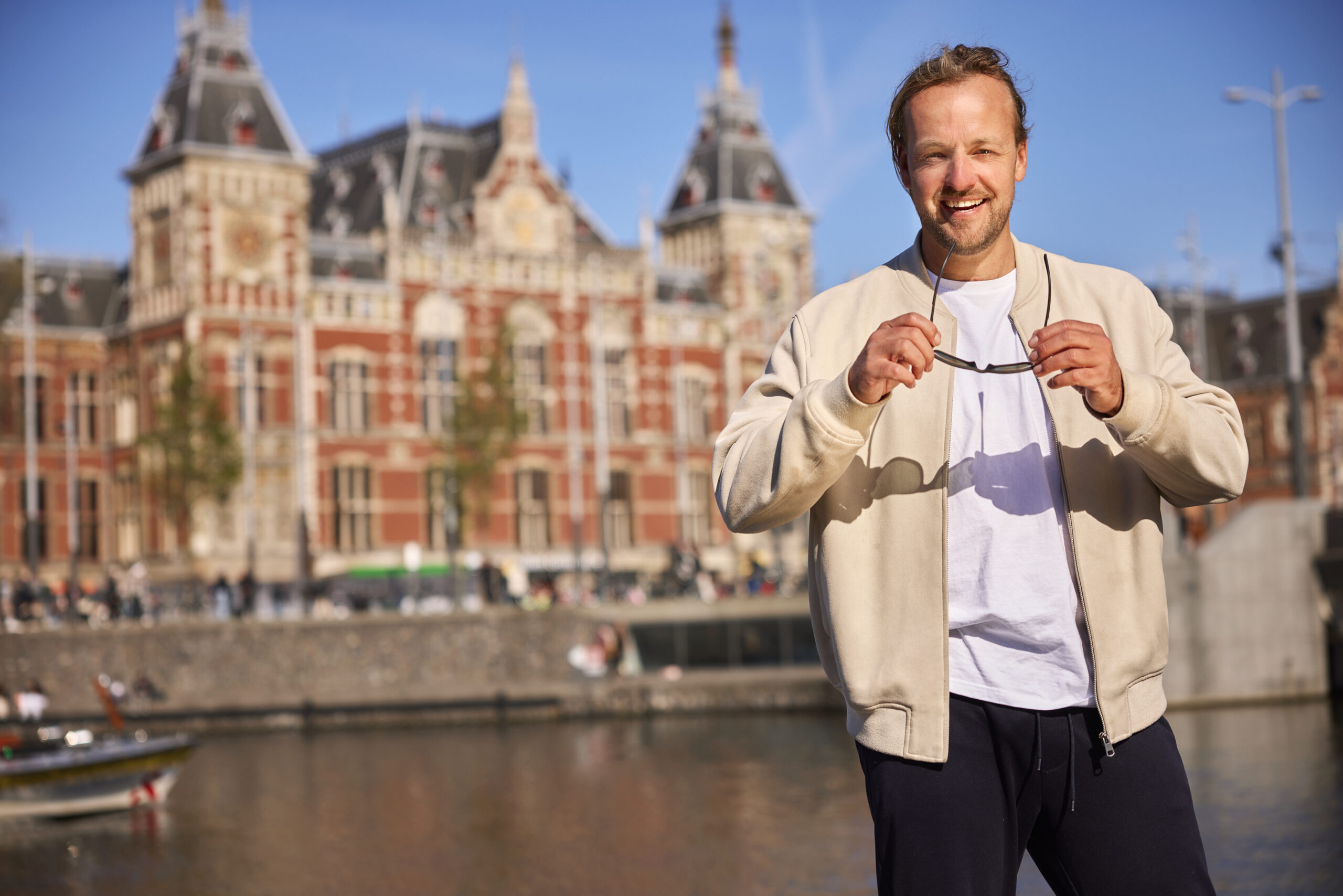

Amsterdam may be compact, but it’s layered like few cities in Europe — centuries of trade, art, and everyday life still shape what you see around every canal bend. As a native Dutchie and local guide & historian, I describe five places that capture Amsterdam’s soul — from quiet courtyards and off the beaten track man made islands to my very favorite museum. Whether it’s your first visit or your fifth, these are the spots I’d never skip.
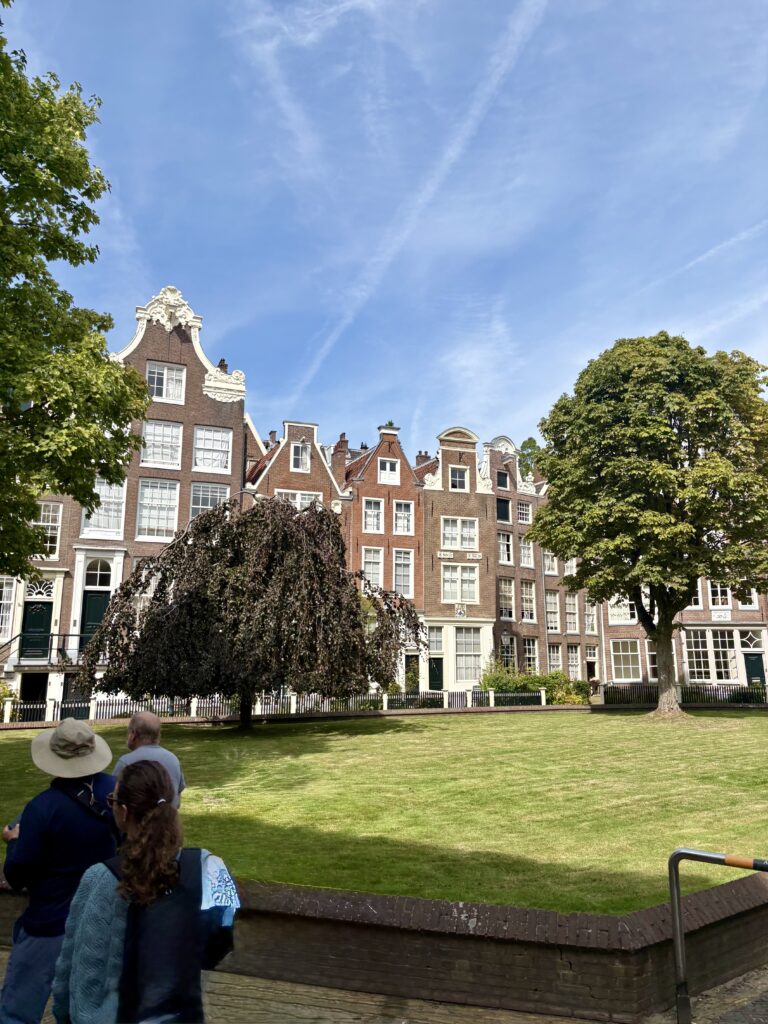
5. The Begijnhof – A Hidden Courtyard in the Heart of the City
Step through an unassuming doorway just off the Spui, and suddenly the noise of the city disappears. The Begijnhof was once home to the Begijnen — devout women who lived communally without taking monastic vows. This peaceful beguinage dates back to the late Middle Ages and still radiates a sense of calm rarely found in the city center.
Look for the one last remaining wooden house in Amsterdam and the small English Reformed Church, where services are still held. This church was used by the earliest Presbyterians, the people who used the Mayflower to move across the pond and start a new colony. The predecessor of the United States of America, but in reality these Presbyterians followed earlier movements out of Amsterdam to start new settlements on the north east coast of North America.
Did you know that Catholicism was illegal in the Dutch Republic for around two hundred years? So the Catholics in Amsterdam had to practice their faith in secret, behind closed doors. ‘Their’ churches were taken from them during the alteration of Amsterdam in 1578, after which no more cathocic churches were present in the city. Even here, in the middle of the Begijnhof, if you look closely, a hidden place of catholic worship quietly survived..
4. The Noordermarkt – Saturday Morning Among Locals
Every Saturday morning, the Jordaan wakes up to the sound of traders setting up their stalls around the Noorderkerk, which has been ongoing for centuries.
The Noordermarkt combines an organic farmers’ market with antiques, books, and vintage treasures. On the Lindengracht, you’ll find a market for the locals, to buy your Dutch cheese, fish, chicken or other meats, and fresh vegetables and fruits.
Sip a coffee from one of the cafés lining the Noordermarkt square, and watch locals greet each other — it’s the Amsterdam equivalent of a small village square.
If you want to experience the city’s community spirit, this is where to start. A hidden gem is situated right across from the square, tucked behind a big greendoor, is a beautiful and quiet courtyard, a place you have to know otherwise you wouldn’t enter.
The Noordermarkt & Lindengracht market on saturdaymorning show off a wide range of market stalls and offer a diversified shopping menu. A must to get a taste of the real Amsterdam, while surrounding by the canals and historic houses Amsterdam is known for.
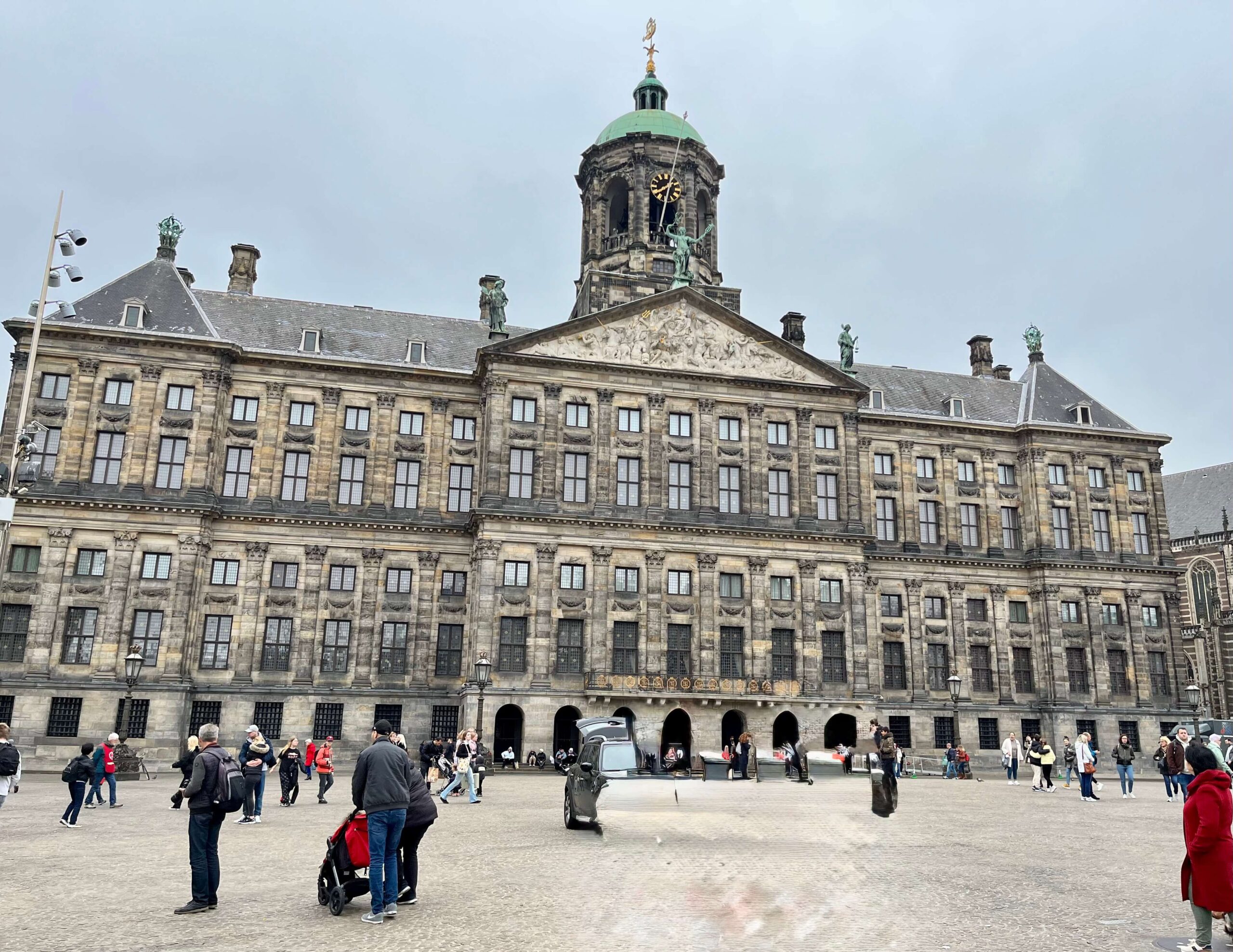
Amsterdam’s City Hall, once called the 8th wonder of the world, was built in a incredible short amount of time and was the largest building in Europe, and possible the world, once finished in 1665. Amsterdam 2025, picture by Ralph Deckers.
3. The Zeedijk – Where Old Amsterdam Meets the World
One of Amsterdam’s oldest streets, the Zeedijk, was once a protective dike against the Zuiderzee. If you look into the alleys, you will notice the streets still go down to this day, which offers a hint at the former Zeedijk’s elevation and it’s functioning as a defense against the water.
Today, The Zeedijk is a colorful mix of centuries-old façades, Asian restaurants, and lively bars. Here you’ll find the Oudezijds Kapel, the city’s oldest chapel, and the Fo Guang Shan He Hua Temple, the largest Buddhist temple in Europe built in traditional Chinese style. In the middle of the street, one can find the famous Café ‘t Mandje, the first openly gay cafe, in the world!
Situated right next to the Red Light District, the Zeedijk tells the story of a port city that’s always looked outward — trading, adapting, and absorbing cultures from across the world and that’s exactly what you’ll experience today. Go and sea for yourself the Chinese restaurants, the typical Amsterdam brown bars and the design stores with typical Amsterdam brands. And please, do yourself a favor, look up to the beautiful gables of the houses. Curious about what the street offers? Have a look at the Zeedijk website.
2. The Westelijke Eilanden – Tranquil Amsterdam by the Water
The three artificial islands which form the ‘western isles’, form on of my favorite neighborhoods and areas of old Amsterdam.
Tucked just west of the city center and underneath the railway tracks, lie three small artificial islands: Prinseneiland, Bickerseiland, and Realeneiland.
Built in the 17th century for shipbuilding and warehouses, today they form one of the most peaceful corners of Amsterdam.
Once you’ll leave the traintracks behind you, which form a creative hub called onder de bogen or ‘underneath the bows/bends’, you’ll enter a completely different atmosphere within Amsterdam. The pace of the city disappears and becomes more village like.
Wooden drawbridges connect cobbled streets lined with ivy-covered houses.
Don’t miss the Koeienbrug, even though named after cows, it’s known as the smallest bridge in Amsterdam, a charming reminder of how intimate the city can feel when you wander beyond the tourist routes. This part of Amsterdam is rarely visited which enhances the experience if you do dare to venture out to this part.
Once these islands were created by one of the many powerful Amsterdam mayors, Andries Bicker, nowadays these islands are a stark reminder of how easy-going life can be, even in the middle of a bustling city.
1. Museum Our Lord in the Attic – Faith Hidden in Plain Sight
Behind an elegant canal house façade on the Oudezijds Voorburgwal lies one of Amsterdam’s most remarkable secrets: a complete 17th-century Catholic church built in the attic. It’s situated in one of the oldest parts of Amsterdam, which nowadays is mostly known for it’s infamous red light district.
When public Catholic worship was forbidden after the Reformation, wealthy merchant and of German origin Jan Hartman transformed his top floors into a clandestine chapel. The Museum Ons’ Lieve Heer op Solder (“Our Dear Lord in the Attic”) preserves this extraordinary space — pink columns, gilded altar, and all.
It’s one of the Amsterdam most moving examples of tolerance, ingenuity, and quiet faith and it’s a must visit for anyone visiting the capital of the Netherlands, Amsterdam.
Amsterdam Rewards Curiosity
Behind every façade and bridge lies another layer of history waiting to be discovered. These five places are my personal favorites — intimate, authentic, and deeply tied to the city’s past. Whether you explore them on your own or join me for a private cultural walk, you’ll see a side of Amsterdam most visitors never find.
Have you enjoyed my story? Read all my stories on Amsterdam here.
Written by Ralph Deckers
Local Amsterdam Guide & Historian – Dutch Cultural Journeys