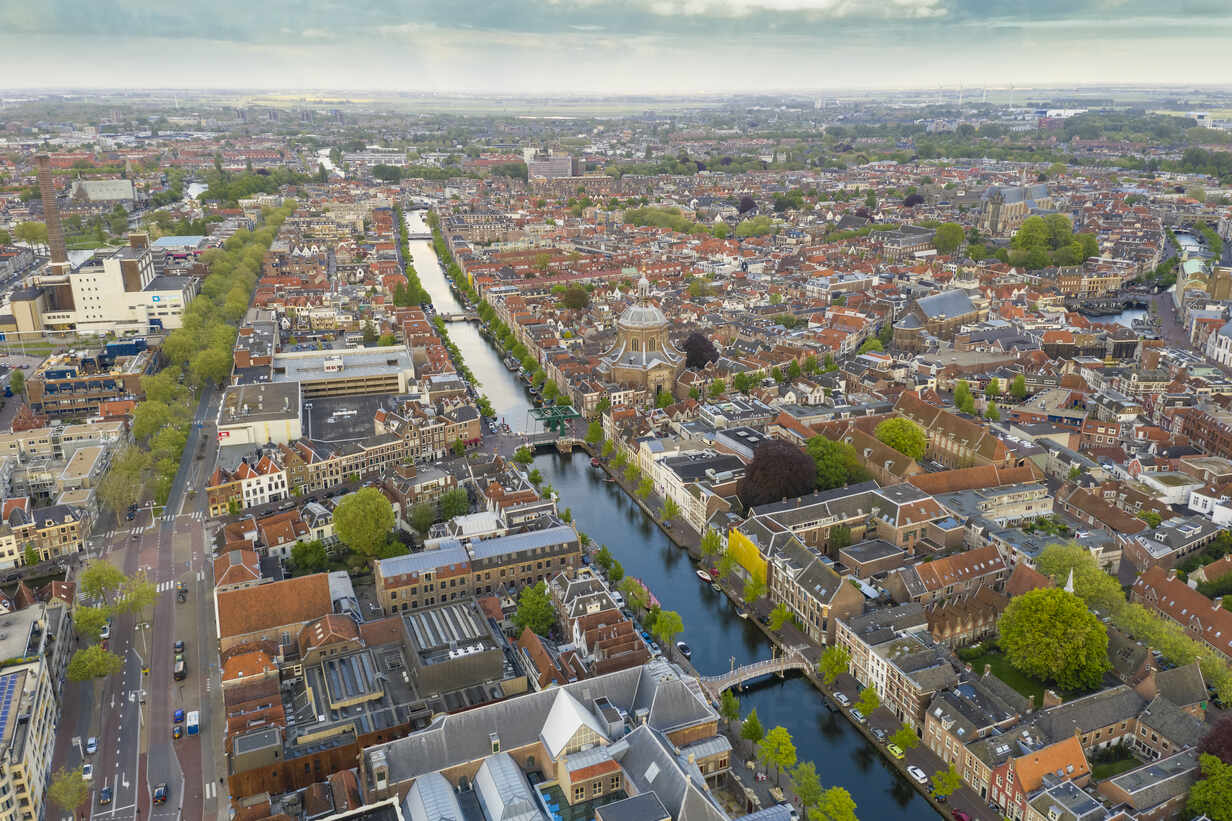

Delft literally means to delve. Explaining the similarities between Dutch and English is easily worth a whole different story I’d like to write down some day. But this blog is about Delft. You know, Delfts blue, where the Royal House of Orange is buried, the town of Johannes Vermeer? Or the town with the largest and most important technical university of the Netherlands which plays a major role in preventing the Netherlands from drowning and which helped design, develop and built the famous Delta Works, but also where things like Bluetooth were invented. Yes, that place. Delft.
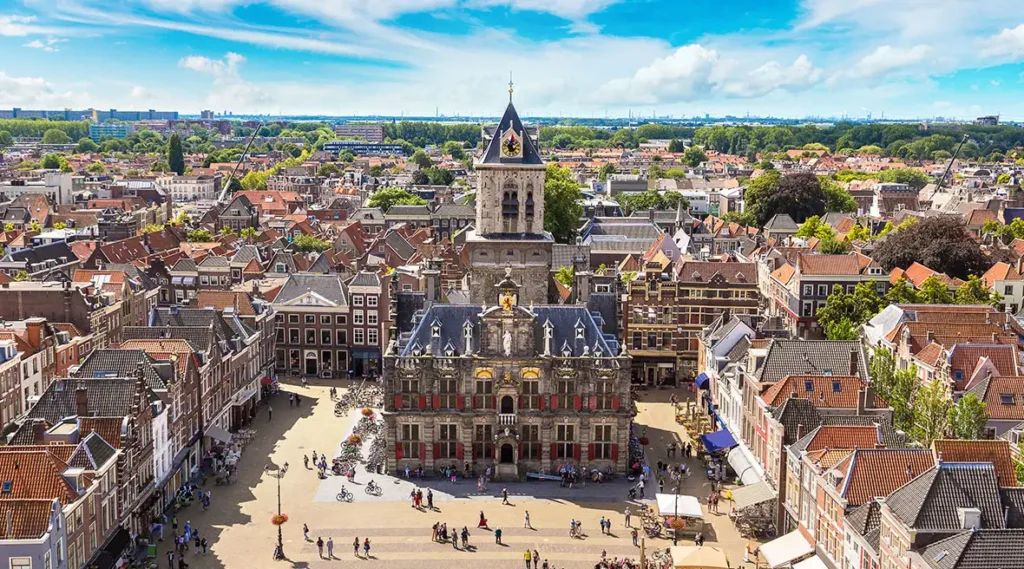
Delft is considered old by Dutch standards. Around one thousand years of history. Although the area has been inhabited by humans for at least 37.000 years, and in the town of Hardinxveld, twenty kilometers east, a 5000 year old treetrunk cano has been found in the peat soil. The city was founded on an interesting connection of waterways, close to the mouth of the Rhine River (Dordrecht) and the Schie. One thousands years ago people dug a canal, which helped drain the surrounding peatgrounds and created a waterway towards Dordrecht and further south, to Antwerp. Hence the name, Delft. A place were people dug.
There’s many things unique about Delft. One of which is it large market square, where for over 800 years, every thursday, a market is held, where locals come to buy their local produce and traders have traded their products since at least the early 1200s. But what specifically sets this place apart from the other Dutch cities is when Delft rose to power as a merchant city. Delft rose to a financial powerhouse early on, from the 12th to the 15th centuries. Whereas other cities in this part of the Low Countries, rose to power at a much later date, mostly in the seventeenth centuries.
This in itself is unique, but this history still shows today in the medieval character of Delft. The relatively smaller man made dug canals and thus, the smaller but profuse cute bridges. Delft’s streets are smaller, it’s houses older, it’s canals and so it’s bridges, narrower. The extremely leaning tower of the Old Church, the Crooked John -built in the 1300s-, is leaning close to two meters. The Prinsenhof was a well known medieval monastery, and Delft was one of the first cities in Holland which developed fortifications.
For this reason, William the Silent, choose it as his base to lead the revolt against the Spanish Catholic Monarchy. It is in the Prinsenhof, where William the Silent was shot on the 10th of October 1584. The bullet hole is still visible in the wall today. From that moment on, Delft became the royal burial site for the House of Orange-Nassau since their regular burial place, Breda, was occupied by the Spanish. This event helped strengthen the city’s prominent future role in the Netherlands.
Medieval Delft: Location Location Location
To the south, cities like Antwerp, Bruges, and Ghent, along with other areas in Flanders, had a considerable population within Europe. Delft served as a transshipment center for goods coming from Scandinavia and locations such as Leiden, Haarlem, and Alkmaar. From the late 1500s onward, Amsterdam experienced rapid growth. With this significant population along the North Sea coast, Delft was well-positioned to trade wool with Great Britain and exchange grain, timber, honey, and animal pelts with Scandinavia, Poland, Russia, and the Baltic region. Additionally, wine, olive oil, exotic spices, and fine clothing arrived in Delft from the Mediterranean. The Rhine River continues to provide access to the European hinterlands all the way up to the Alps.
The excellent waterways connected Delft to an international and intercontinental tradingnetwork. The city became an industrial powerhouse where printing, the production of glass and the production of tapestry was in full swing in the middle of the 17th century.
Enter Chinese & Japanese porcelain
The Dutch East India Company, the VOC (Vereenigde Oost-Indische Compagnie), erected in 1602, is importing HUGE amounts of Chinese porcelain in the early 1600s, an incredible popular exotic product which was unknown to Europeans a hundred years before. in Europe people had been using ceramics up to this point. The nouveaux riche, the new elites of the Dutch republic and in Europe go absolutely mental for Chinese porcelain: It is different.
The hard, white, translucent, incredibly strong stuff was unlike anything made in Europe up to that point. The ‘white gold’.
I like to emphasize that the study of history isn’t about knowing dates. But sometimes it is. In 1644, the Ming Dynasty fell, China entered a period of chaos. No more porcelain, boo hoo for the wealthy merchant layer of Dutch society. Dutch elites still want porcelain. Delft already possessed a strong production industry, including a pottery production area. Red earthenware, simple tiles and domestic potteries. An opportunity arose.
Lacking Kaolin clay, the Delftenaren were unable to produce Chinese porcelain. But the new product, tin glazed earthenware, handpainted with kobalt blue, was lighter, more elegant, and more refined than anything produced in Europe before.
By 1670 Delft Blue was sold all over Europe and over thirty factories were in full production in and around Delft. Over time, the only factory which survived the centuries is Royal Delft museum, one of the oldest brands in the Netherlands, established in 1653. Royal Delft museum is a fascinating museum, where the art of creating Delft Blue is still alive and you as a visitor, will see live.
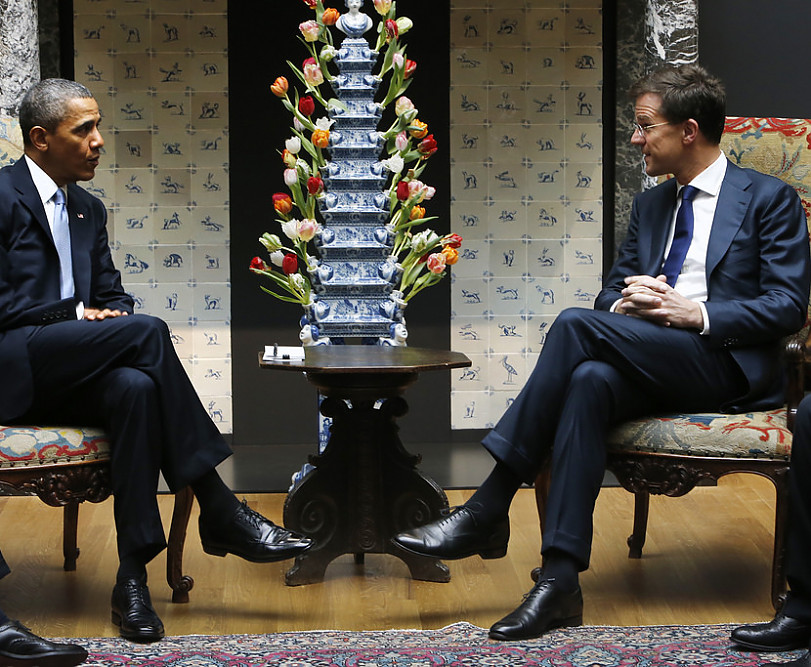
The Dutch Royal family still gift specially crafted Delft Blue products to people and places all over the globe. The emperor of Japan Akihito has received three Royal Delft blue plates, and Barack Obama, former president of the USA, received a Royal Delft Blue Tulip pyramid.
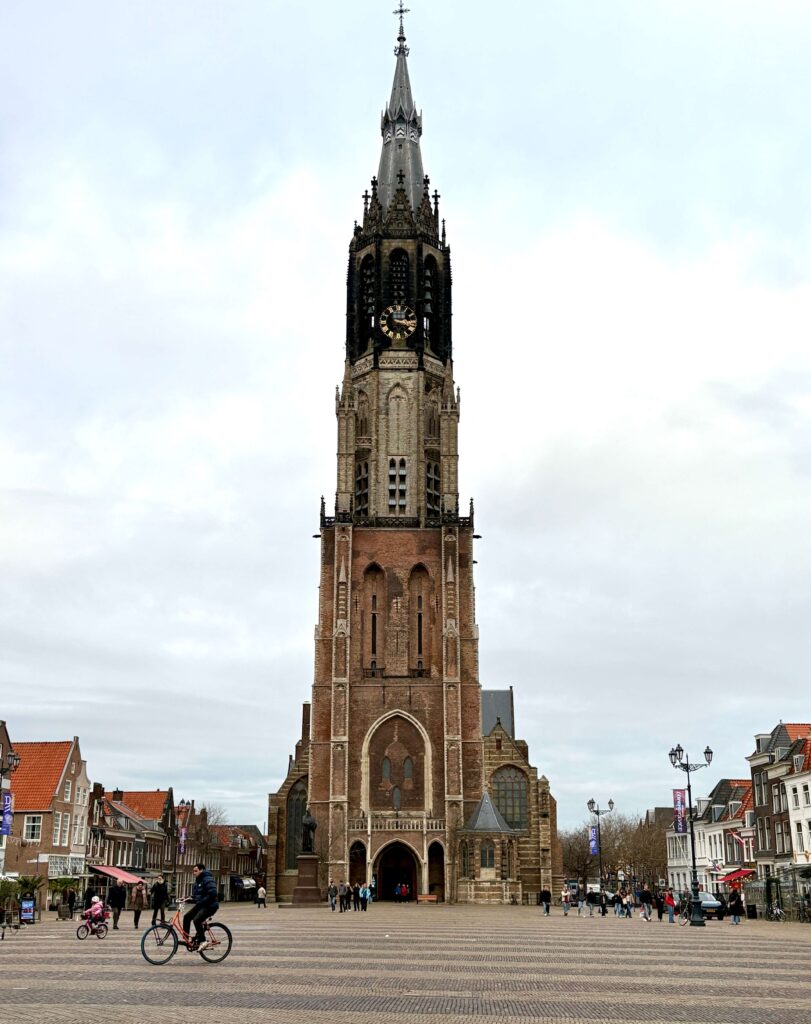
Delft’s market square is arguably the prettiest square in the Netherlands, it’s only real competitor in my humble opinion, is the St. Bavo square in Haarlem. The Town Hall on the Markt combines a 13th-century prison tower with a graceful 17th-century Renaissance façade designed by Hendrick de Keyser. The medieval core once held the courtroom and jail, while the later reconstruction added elegant stonework and red shutters that face the Nieuwe Kerk. Inside, you’ll find old cells, carved woodwork and traces of Delft’s civic history.
The Nieuwe Kerk also on the Markt is a soaring late-Gothic landmark, built between 1396 and 1496 and crowned with one of the tallest church towers in the Netherlands. Inside lies the magnificent marble tomb of William the Silent, whose burial here in 1584 made the church the official resting place of the Dutch royal family. Light-filled, elegant and rich in history, the Nieuwe Kerk faces the Town Hall across the square, together forming the symbolic heart of Delft. The Town Hall remains a proud symbol of the city’s independence and together, they symbolise the separation and simultaneously the balance between church and state.
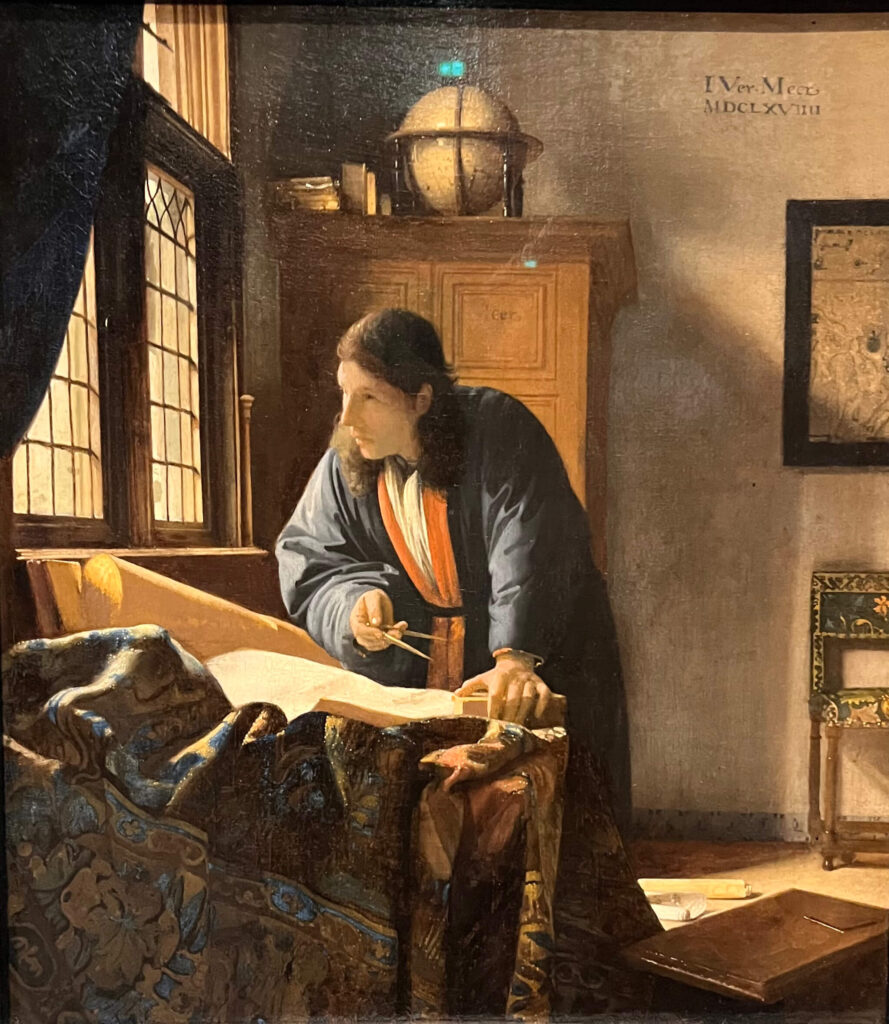
Somewhat visible from the market square is the ancient St Lucas Gilde house. This guilt was the place to be for painters. Once a member, you had access to a large trading network of artdealers, painters and materials. The perfect place to house the Vermeer Center in today. Even though we only know of thirty six Vermeer paintings, his paintings are without a doubt all masterpieces. His whole life Vermeer worked in Delft, and unfortunately very little is known about him.
Vermeer captured intimate, quiet moments, and his use of light is unmatched. Think of the Milkmaid found at the Rijksmuseum, or the girl with the Pearl earring or View of Delft – see below, reputably the best cityview in Western art- which are both found at the Mauritshuis in the Hague. The Mauritshuis is small but houses an extraordinary collection of paintings.
Vermeer captured intimate, quiet moments, and his use of light is unmatched. Think of the Milkmaid found at the Rijksmuseum, or the girl with the Pearl earring or View of Delft – see below, reputably the best cityview in Western art- which are both found at the Mauritshuis in the Hague. The Mauritshuis is small but houses an extraordinary collection of paintings.
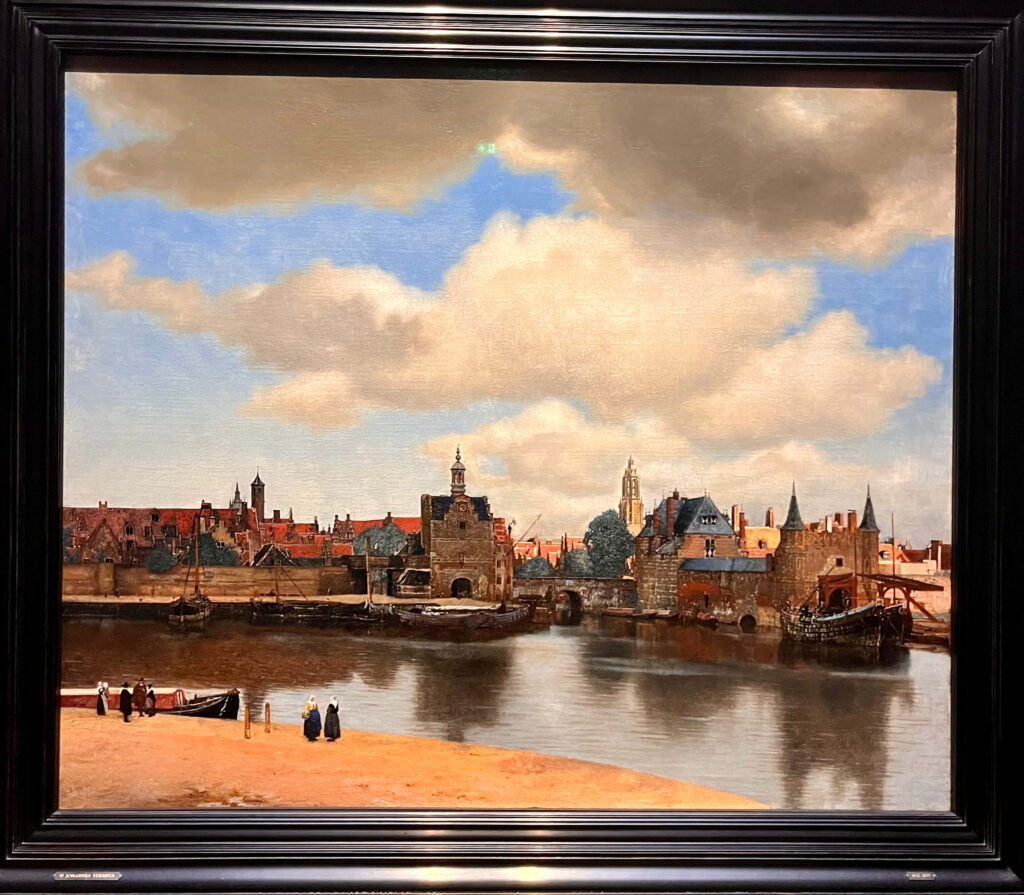
View of Delft, 1660, Johannes Vermeer, Mauritshuis, The hague. Picture by Ralph Deckers, 2025.
So on your day to Delft, bring a visit to the Crooked John, the Royal Delft museum (20 minutes on foot out of town, 10 minutes by car, no time on bicycle), The Grand market square to visit the New Church and the crypte of the Orange Royals.
Do not forget to take pictures of the magnificent Town hall. Art lovers should check the Vermeer Center and history geeks should look for the bullet hole in the Prinsenhof. Active travelers should not miss the opportunity to climb the Delft New Church tower, the second highest church tower in the Netherlands, 108.75 meters, 376 steps..
Delft is a fun place, pittoresque, and offers souvenirsshops and bars and restaurants abound. A great place to stay for severals days and use it as a base to explore Rotterdam, the Hague and Leiden. Or a great one day out from Amsterdam or the Hague. Your Dutch Journey to Delft will not disappoint.
Locals favorites
- A true locals favorite is Café de Wijnhaven, where one can go for coffee and famous Dutch apple pie, drinks, lunch and for dinner. It’s an ‘eetcafe’, the Dutch equivalent of the English pub, literally an ‘eatingcafe’.
- One of the best bakery’s is called ‘Boulangerie Michel’, a French inspired bakery, for you typical sandwiches, sweets, snacks and coffee.
- Spijshuis de Dis is a true gem, on of the larger squares of Delft and decorated in a way you won’t forget easily. Eating from Delft blue plates, who doesn’t want that?
Before you leave, make sure you buy a bag of candy the old school way in the cutest and one of the last traditional candy stores in the Netherlands. Mix a pointy bag from the jars, the lady behind the counter weighs, and it’s like getting a dollar for dime. Don’t worry, the lady speaks English very well, almost all Dutch people do. It’s near the Prinsenhof museum, look for the sign ‘Winkeltje van Kouwenhoven’.
For the ones with more time, do not miss the ‘Oostpoort’ the last medieval gate of Delft, of the eight which were ones in place to protect the city. The beguinage of Delft is a nice walk too and definitely worth a visit!
Delft is easily reachable by public train, or metro from the Hague or Rotterdam and is situated right on the highway between Rotterdam & Amsterdam. It will serve as a perfect base to explore the surrounding cities like The Hague, Leiden, Gouda or Rotterdam or as a great layover from Amsterdam to Belgium or vice versa.
Want to explore more? Visit my complete Netherlands page for all stories and tips. Or go to my Leiden-Travel-Guide.
Written by Ralph Deckers
Local Guide & Historian – Dutch Cultural Journeys